BEEP
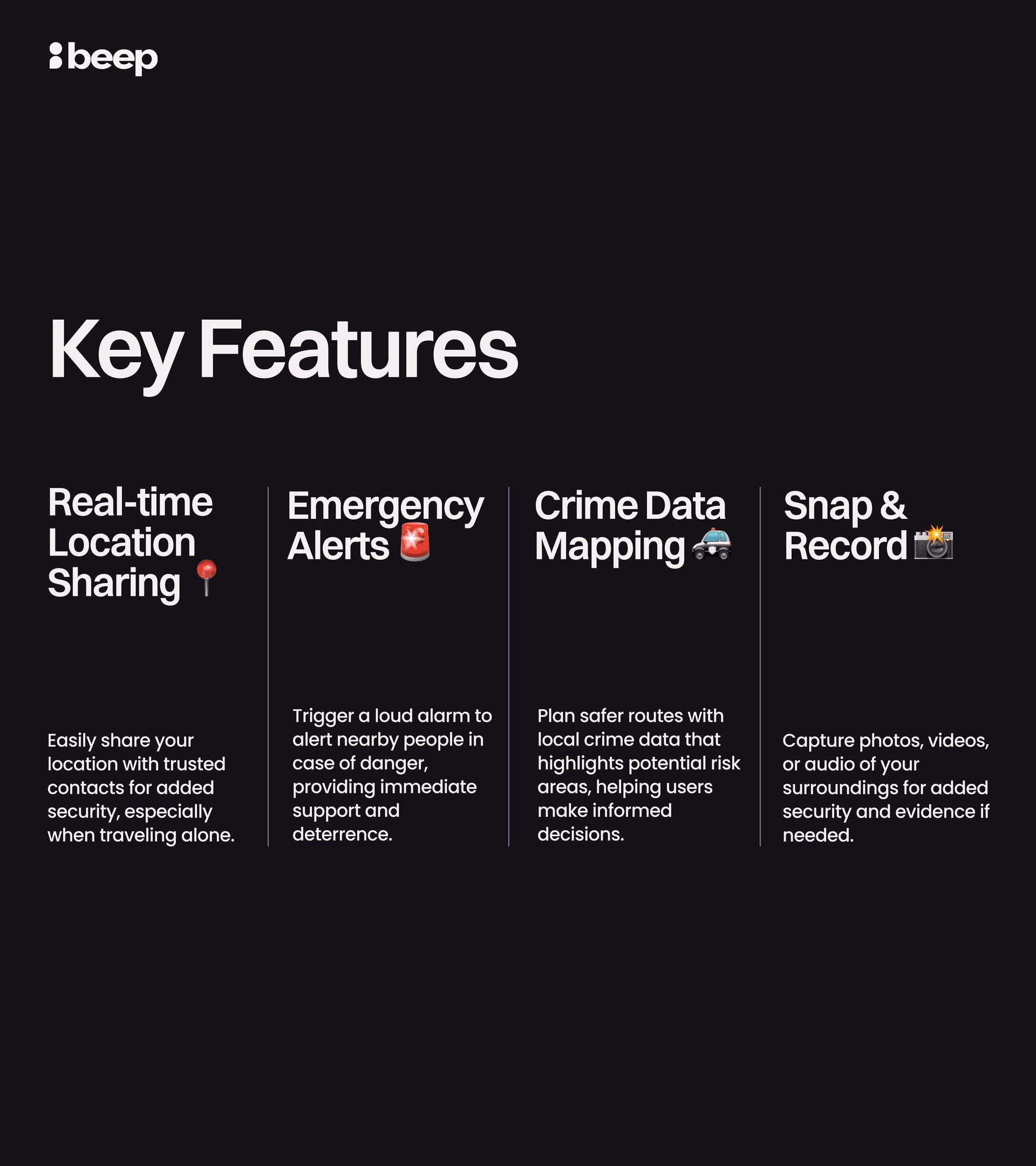
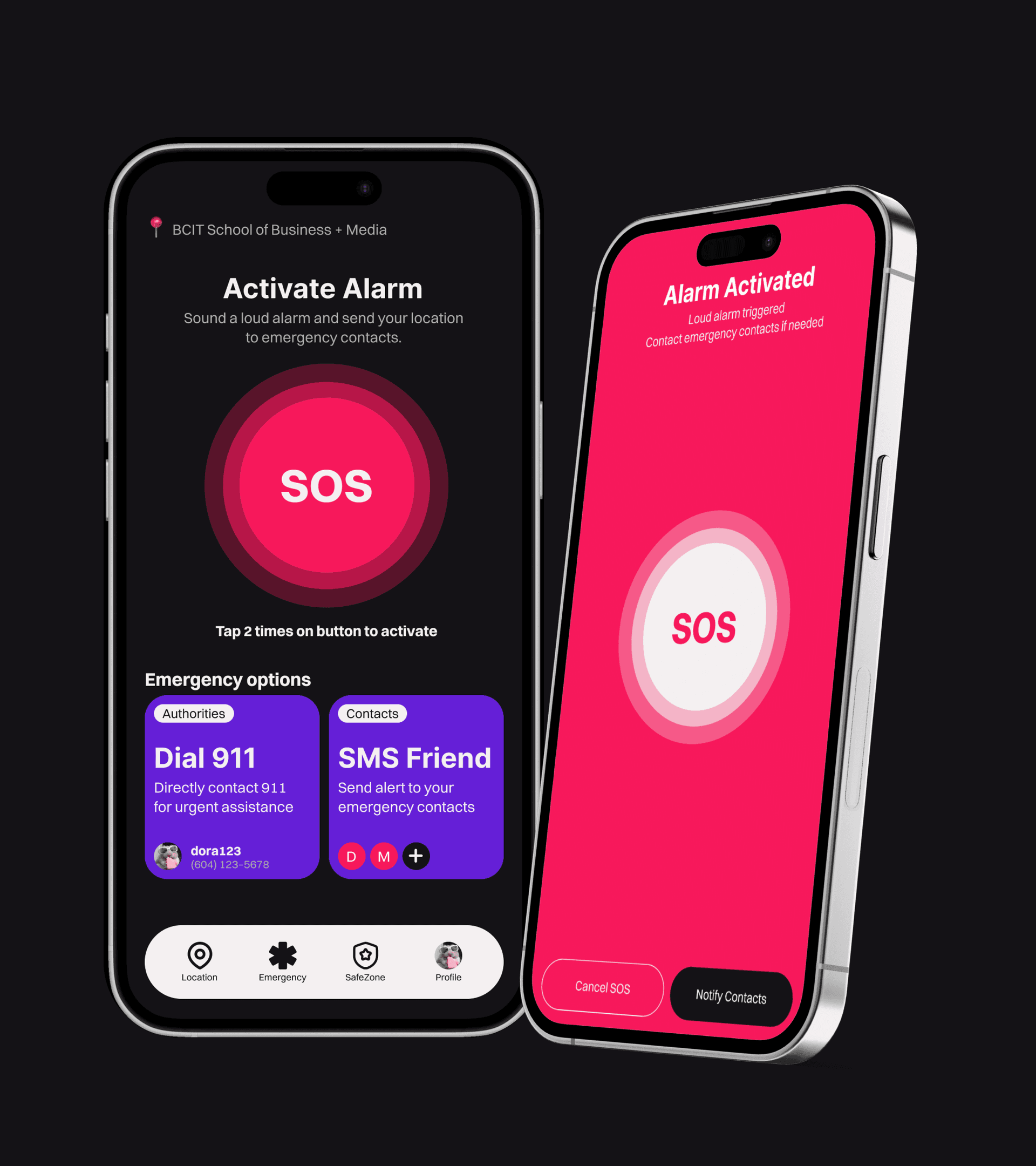
Beep is a safety app that offers real-time safety insights, location-sharing, and proactive emergency features to provide peace of mind — making it an ideal companion for everyone, especially women and female-presenting users navigating alone.
The app was developed using React Native with Expo for seamless cross-platform deployment. We integrated Google Maps and Places APIs to offer accurate geolocation, pathfinding, and safe-route guidance. For real-time features such as SOS alerts and user location sharing, we utilized Supabase for its lightweight backend services and Firebase for push notifications and authentication.
SEE LIVE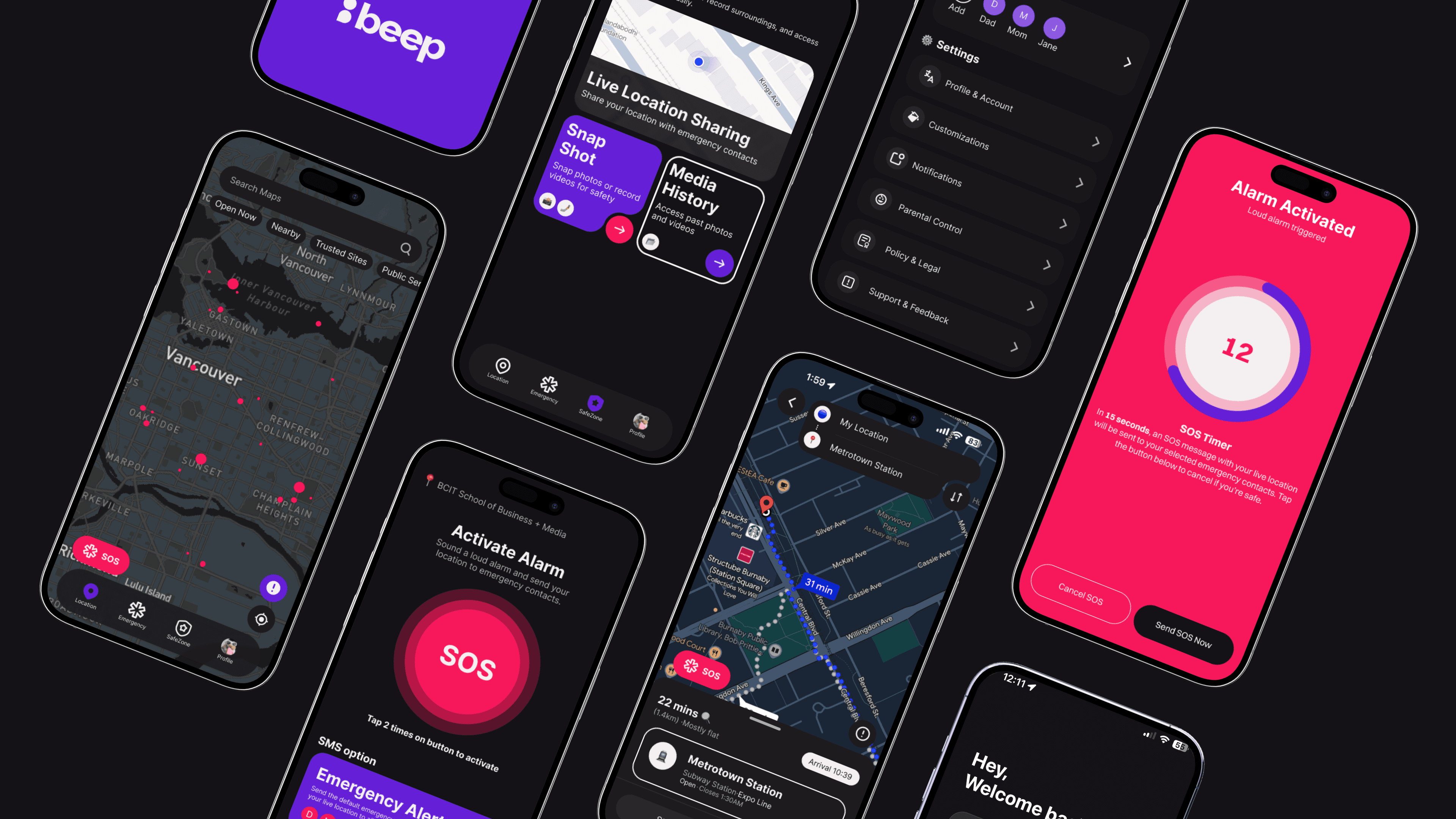
My Role
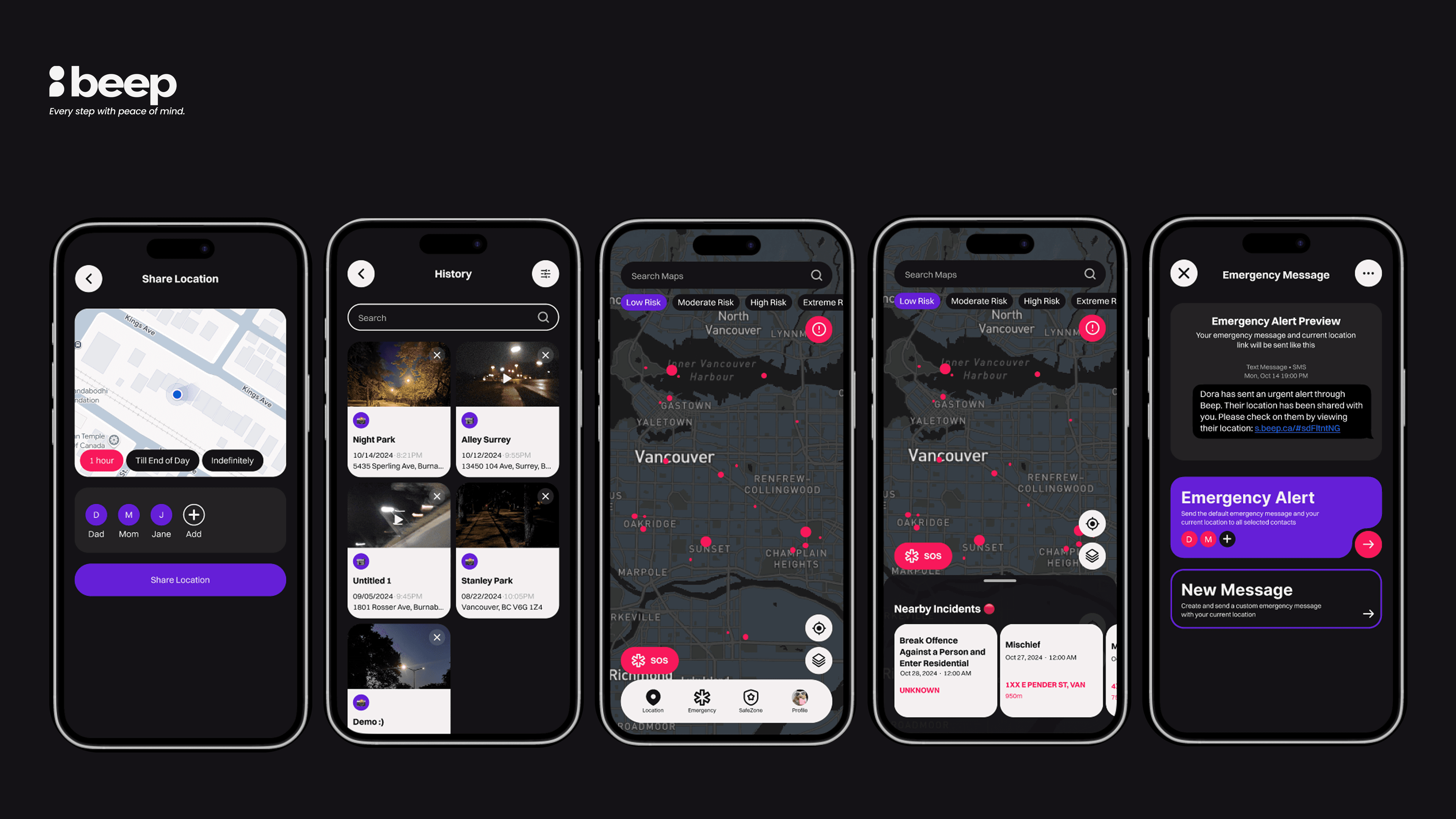
As the frontend developer, I was primarily responsible for implementing the main map feature — including real-time crime data visualization and AI-assisted safe-route guidance. This involved close collaboration with Denis to integrate our custom TensorFlow model, ensuring the route logic dynamically responded to crime type, severity, and location data.
AI & Crime Data Analysis
A key feature of Beep is its integration of AI to help users navigate safely through urban spaces. We used TensorFlow to build a custom model that analyzes crime data and informs route guidance in real time. The model was trained on a dataset containing various crime reports, including details like crime type, severity level, time of occurrence, and location.
Based on these inputs, we created a system that prompts the AI to evaluate how far users should be guided away from high-risk zones, how long a location should be flagged as severe or low risk, and how different types of crimes should influence suggested routes. This allows Beep to offer intelligent, context-aware guidance that adapts to both the environment and user safety in meaningful ways.
CHALLENGES & OUTCOME
One of our main challenges was identifying the right tech stack to support real-time features like crime data integration, live SOS alerts, and location tracking — all within a responsive and intuitive map interface. We needed a solution that worked seamlessly with both Google Maps and Apple Maps, while also handling live data streaming, user authentication, and session security.
Although we explored tools like Firebase, Supabase, and custom overlays, we encountered some limitations with Google’s navigation interface. These restrictions prevented us from implementing dynamic route guidance features as originally envisioned, leading us to pause further development.
If the project resumes in the future, we plan to build a custom navigation interface. This would not only help us avoid platform constraints but also give us more control over how routes are generated, scored, and visualized for safety.
Despite the obstacles, our team successfully delivered a fully functional mobile app for both iOS and Android — ultimately securing 3rd place in the Interdisciplinary Student Projects (IDSP) Competition.
More Projects
-’25